Meadows Chemical’s Biggest Lessons From 2025
2025 was a year that tested chemical supply chains like never before. Shipping delays, material shortages, and sudden swings in demand affected manufacturers across industrial, HI&I, coatings, and specialty sectors. Companies that could adapt quickly and stay flexible were able to keep operations running smoothly, while others experienced costly interruptions.
Building a resilient chemical supply chain isn’t just about having backup plans. It’s about working with partners who understand the market, having access to multiple sources of materials, and being ready to respond when things don’t go as expected. The experiences of 2025 provide valuable lessons for companies looking to strengthen their supply chains in 2026 and beyond.

What Tested Chemical Supply Chains in 2025
The past year brought several challenges that tested the limits of even the most prepared supply chains.
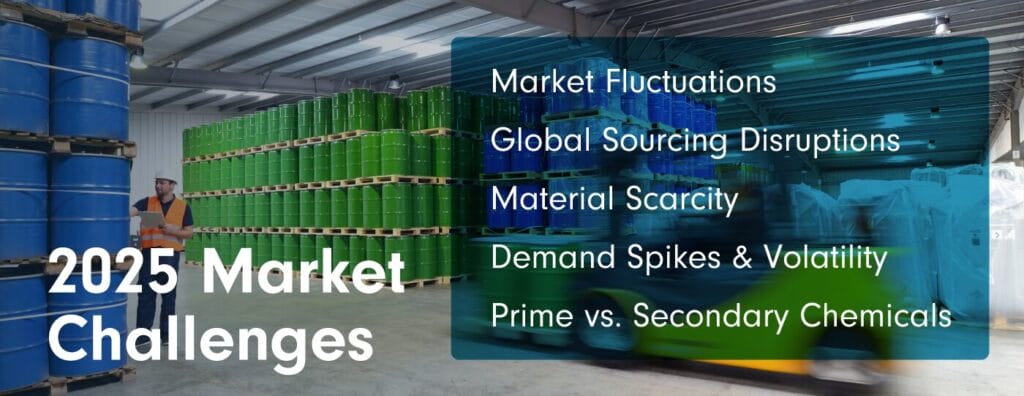
Market Fluctuations
Prices for many chemicals shifted quickly throughout the year. Energy costs, raw material availability, and global events drove price swings that made budgeting and planning more difficult for manufacturers.
Global Sourcing Disruptions
Many operations rely on international supply chains for key materials. In 2025, delays at ports, shipping container shortages, and changing import/export rules created unexpected gaps in supply. Manufacturers who depended solely on a single source faced production delays and lost revenue.
Material Scarcity
Certain chemicals, whether used in coatings, HI&I products, or industrial applications, were in short supply at times. Companies without flexible sourcing strategies were at risk of downtime or having to adjust production schedules.
Demand Spikes and Volatility
Sudden surges in demand, emergency orders, and regional production increases added pressure to supply chains. The ability to respond quickly became just as important as having inventory on hand.
Prime vs. Secondary Chemicals
2025 reinforced the importance of having options. Access to both prime (new) and secondary (byproduct, surplus, or off-spec) chemicals allowed companies to keep production moving when traditional sources were delayed or unavailable.
Recognizing these challenges is the first step toward building a supply chain that can withstand uncertainty.
Key Principles of a Resilient Chemical Supply Chain
A resilient supply chain is built on planning, flexibility, and strong partnerships. Here are the principles that proved essential in 2025:
1. Diversified Sourcing
Relying on one supplier or one region is risky. Companies that had multiple sources, covering both prime and secondary chemicals, were able to better avoid production stops. Diversifying suppliers reduces dependency and keeps operations moving when disruptions occur.
2. Strong Supplier Relationships
A supplier who understands your business and can respond quickly is invaluable. Open communication, industry experience, and hands-on support can make the difference between keeping production on track and facing downtime. Suppliers who monitor market conditions and offer alternative solutions help companies navigate disruptions with confidence.
3. Global Reach, Local Support
Access to international sources is important, but so is local expertise. Suppliers with regional logistics, warehousing, and customer support can solve problems faster, coordinate deliveries efficiently, and provide practical guidance. Combining global reach with local service improves reliability and reduces lead times.
4. Flexibility to Adapt
Being able to pivot quickly is key. This might mean using secondary or off-spec materials when prime supplies are delayed, adjusting delivery schedules, or finding alternative chemical grades. Flexibility keeps production running without compromising quality or compliance.
5. Proactive Planning
Forecasting demand, evaluating inventory, and monitoring market trends help companies prepare before problems arise. Proactive planning, paired with close communication with suppliers, makes it easier to prevent disruptions instead of reacting to them.
What We Learned in 2025
Looking back on last year, one thing became clear: even the most prepared chemical operations can be tested. Companies that weathered the year successfully did so because they expected the unexpected. They built contingency options into their supply strategies, maintained extra inventory where needed, and leaned on alternative suppliers when disruptions arose. Flexibility wasn’t just a convenience, it was a necessity.
Experience proved to be another critical factor. Suppliers who truly understand the chemical industry made a difference beyond simply delivering materials. They offered guidance, anticipated potential bottlenecks, and suggested alternatives when traditional supply lines were tight. Having a partner like Meadows Chemical who knows the market can turn a challenge into a manageable situation.
Another lesson from the year was the value of having options. Companies that incorporated secondary chemicals into their supply strategies were able to keep production moving even when prime materials were delayed. This approach requires a knowledgeable supplier who can ensure quality and advise on proper applications, but it provides a level of resilience that no single-source strategy can match.
Local support also emerged as a key differentiator. Global sourcing offers reach, but regional logistics and hands-on service help resolve issues quickly. Companies that partnered with suppliers who could coordinate deliveries and communicate effectively at the local level were able to maintain schedules and avoid costly downtime.
Finally, flexibility builds confidence. Organizations that could adjust orders, pivot to alternative materials, or shift timelines without friction maintained both production and trust with their customers. In a year like 2025, the ability to adapt wasn’t just a competitive advantage—it was a foundation for continued success.
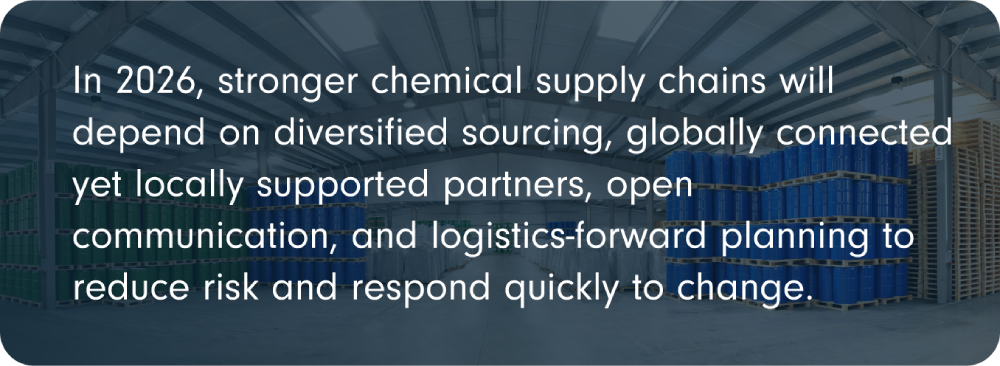
Preparing for 2026 and Beyond
Resilience isn’t a one-time effort, it’s an ongoing process. To strengthen chemical supply chains in 2026, focus on:
- Partnering with suppliers that offer both prime and secondary materials, ensuring alternatives when disruptions occur
- Choosing partners with global reach and local service, combining international sourcing with regional support
- Maintaining open communication with suppliers to anticipate and address potential bottlenecks
- Considering logistics, inventory, and storage as integral parts of supply chain planning
These strategies reduce risk, minimize downtime, and allow companies to respond quickly to changes in demand or market conditions.
For companies looking to strengthen their supply chain in 2026, partnering with an experienced, hands-on supplier is critical.
Talk to Meadows Chemical to explore solutions that deliver reliability, flexibility, and confidence—even in uncertain times.