• Skip to main content
  • Why Meadows Chemical
  • Beneficial Reuse
  • Products
  • Markets
  • Company
    • About Us
    • News
    • Careers
  • Resources
  • Contact
  • Why Meadows Chemical
  • Beneficial Reuse
  • Products
  • Markets
  • Company
  • Resources
  • Contact

The Hidden Chemical Freight Cost Nobody Talks About (And How to Stop Paying It)

Jordan Sadler, Director of Sourcing and Procurement

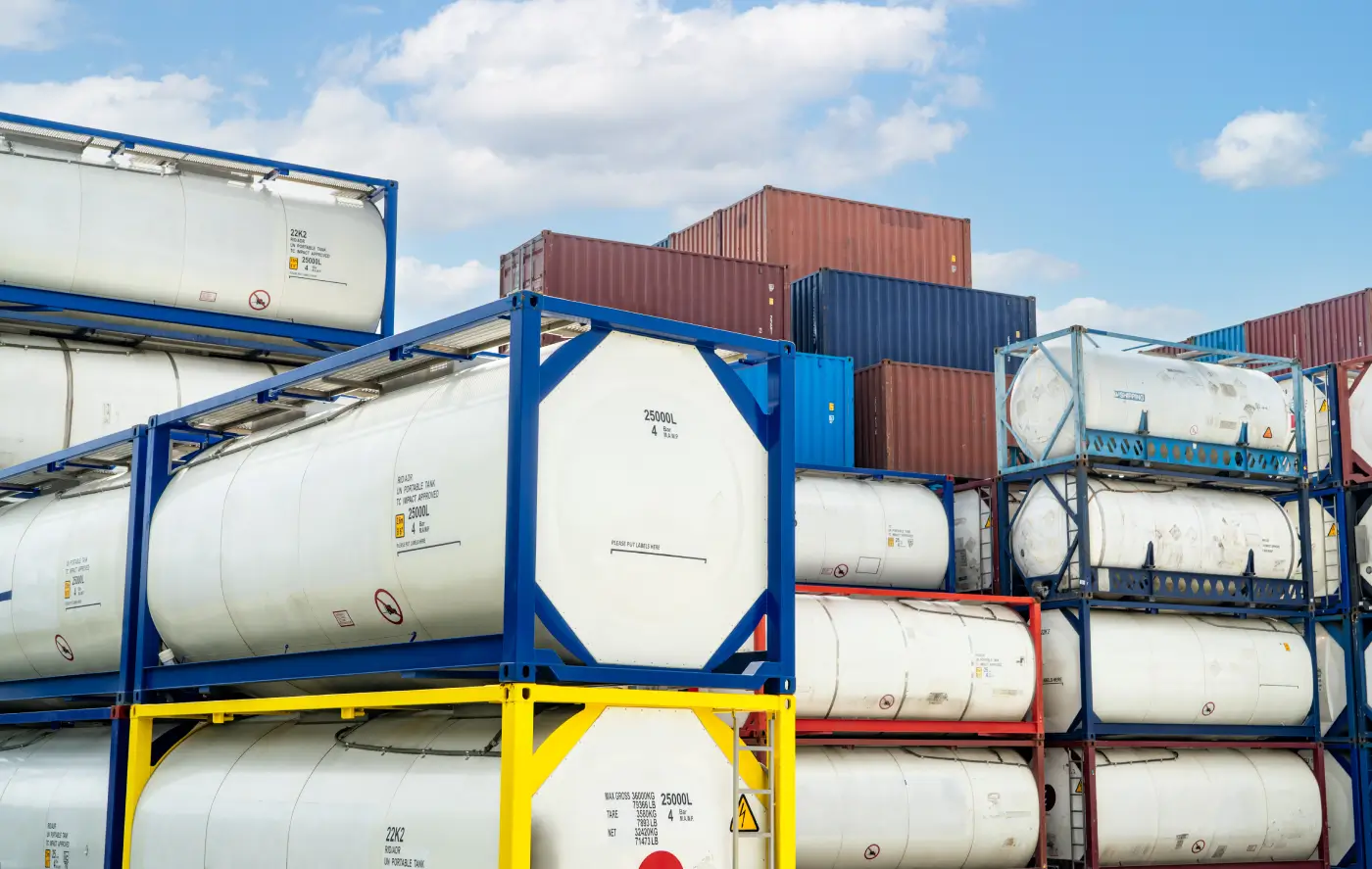
Stacks of white cylindrical tank containers and rectangular cargo containers at a shipping yard under a blue sky with scattered clouds.

If you’ve ever opened a freight invoice and done a double-take, you’re not alone.

The gap between a quoted rate and a final invoice is one of the most consistent frustrations in chemical procurement — and one of the least talked-about. Not because it’s rare, but because it’s normalized. Buyers absorb the difference, adjust their math, and move on. The problem is that across dozens of shipments and multiple suppliers, that gap compounds into a meaningful budget problem that’s never formally identified.

Logistics as a Margin Conversation, Not a Fulfillment Conversation

The way most chemical buyers think about freight is as a delivery problem: get the product from here to there, on time, intact. That framing isn’t wrong, but it’s incomplete.

Freight is a margin variable. The difference between a transparent, well-structured logistics relationship and a deliberately vague one doesn’t just show up in occasional invoice surprises — it accumulates across a year’s worth of shipments. Buyers who treat logistics as a strategic cost center, not a back-end administrative function, consistently outperform those who don’t.

Here’s what we’re actually seeing happen, and what you can do about it.

What’s Hiding Inside Your Freight Quote 

A base freight rate covers transportation from Point A to Point B. It doesn’t cover most of what determines your actual cost.

The charges that show up afterward include:

  • Fuel surcharges indexed to weekly diesel prices
  • Terminal handling fees
  • Detention charges when a driver waits beyond an agreed window
  • Tank wash fees for bulk chemical shipments
  • Hazmat documentation and compliance fees
  • Add-on fees for anything from liftgate requirements to limited-access delivery locations

For bulk chemical loads specifically, hazmat classification alone can add significant cost on top of a quoted base rate, depending on DOT placarding requirements.

None of this is inherently dishonest. These costs are real — but often aren’t disclosed in a quote. By the time the invoice arrives, the total looks nothing like what you agreed to.

Dealing With Increasing Costs In Other Areas? This Guide Can Help

Why Chemical Freight Is Especially Vulnerable

Dry freight carries fewer costs than bulk chemical logistics. Specialized drivers with HAZMAT certification command higher pay and are in shorter supply than standard CDL drivers. Insurance premiums for tanker loads are structurally higher because the liability exposure from a chemical spill is categorically different from a damaged pallet of consumer goods. Tank cleaning between loads, regulatory compliance documentation, and route-specific requirements all add cost that a base rate rarely reflects.

The buyers most likely to get caught by this are the ones who don’t ship chemical freight consistently enough to know what “normal” looks like or those that prioritize the lowest quote without asking what it doesn’t include.

The Questions Worth Asking Before You Book

The most effective thing a chemical buyer can do is make the full cost conversation happen before the shipment, not after the invoice. That means asking:

  • Does this quote include fuel surcharges, and how are they calculated?
  • What accessorial charges apply to this lane or this product?
  • Are there tank wash fees, and who pays them?
  • What’s the detention policy, and at what rate?
  • Are hazmat documentation fees included?

A supplier or freight partner who can answer those questions clearly is giving you the full picture. One who can’t — or won’t — is worth paying attention to.

At Meadows, logistics isn’t an afterthought to the sourcing conversation. Packaging format, routing, timing, consolidation opportunities — these are things we think through as part of putting together a solution, not things we hand off once the order is placed. When we quote, we quote the full picture. That’s not a differentiator we should have to advertise — it’s the minimum standard every buyer deserves and too few actually get.

If your current freight costs don’t add up the way you’d expect, let’s talk. Sometimes a second set of eyes on a logistics program is all it takes.

Contact Meadows Chemical

About the Author 

Jordan Sadler, Director of Sourcing and Procurement

Jordan leads sourcing for Meadows Chemical, focused on supplier strategy, cost management, and keeping the supply chain running smoothly. He works with commercial and logistics teams to make sure Meadows delivers the right products, on time, at the right price.

Stacks of white cylindrical tank containers and rectangular cargo containers at a shipping yard under a blue sky with scattered clouds.

If you’ve ever opened a freight invoice and done a double-take, you’re not alone.

The gap between a quoted rate and a final invoice is one of the most consistent frustrations in chemical procurement — and one of the least talked-about. Not because it’s rare, but because it’s normalized. Buyers absorb the difference, adjust their math, and move on. The problem is that across dozens of shipments and multiple suppliers, that gap compounds into a meaningful budget problem that’s never formally identified.

Logistics as a Margin Conversation, Not a Fulfillment Conversation

The way most chemical buyers think about freight is as a delivery problem: get the product from here to there, on time, intact. That framing isn’t wrong, but it’s incomplete.

Freight is a margin variable. The difference between a transparent, well-structured logistics relationship and a deliberately vague one doesn’t just show up in occasional invoice surprises — it accumulates across a year’s worth of shipments. Buyers who treat logistics as a strategic cost center, not a back-end administrative function, consistently outperform those who don’t.

Here’s what we’re actually seeing happen, and what you can do about it.

What’s Hiding Inside Your Freight Quote 

A base freight rate covers transportation from Point A to Point B. It doesn’t cover most of what determines your actual cost.

The charges that show up afterward include:

  • Fuel surcharges indexed to weekly diesel prices
  • Terminal handling fees
  • Detention charges when a driver waits beyond an agreed window
  • Tank wash fees for bulk chemical shipments
  • Hazmat documentation and compliance fees
  • Add-on fees for anything from liftgate requirements to limited-access delivery locations

For bulk chemical loads specifically, hazmat classification alone can add significant cost on top of a quoted base rate, depending on DOT placarding requirements.

None of this is inherently dishonest. These costs are real — but often aren’t disclosed in a quote. By the time the invoice arrives, the total looks nothing like what you agreed to.

Dealing With Increasing Costs In Other Areas? This Guide Can Help

Why Chemical Freight Is Especially Vulnerable

Dry freight carries fewer costs than bulk chemical logistics. Specialized drivers with HAZMAT certification command higher pay and are in shorter supply than standard CDL drivers. Insurance premiums for tanker loads are structurally higher because the liability exposure from a chemical spill is categorically different from a damaged pallet of consumer goods. Tank cleaning between loads, regulatory compliance documentation, and route-specific requirements all add cost that a base rate rarely reflects.

The buyers most likely to get caught by this are the ones who don’t ship chemical freight consistently enough to know what “normal” looks like or those that prioritize the lowest quote without asking what it doesn’t include.

The Questions Worth Asking Before You Book

The most effective thing a chemical buyer can do is make the full cost conversation happen before the shipment, not after the invoice. That means asking:

  • Does this quote include fuel surcharges, and how are they calculated?
  • What accessorial charges apply to this lane or this product?
  • Are there tank wash fees, and who pays them?
  • What’s the detention policy, and at what rate?
  • Are hazmat documentation fees included?

A supplier or freight partner who can answer those questions clearly is giving you the full picture. One who can’t — or won’t — is worth paying attention to.

At Meadows, logistics isn’t an afterthought to the sourcing conversation. Packaging format, routing, timing, consolidation opportunities — these are things we think through as part of putting together a solution, not things we hand off once the order is placed. When we quote, we quote the full picture. That’s not a differentiator we should have to advertise — it’s the minimum standard every buyer deserves and too few actually get.

If your current freight costs don’t add up the way you’d expect, let’s talk. Sometimes a second set of eyes on a logistics program is all it takes.

Contact Meadows Chemical

About the Author 

Jordan Sadler, Director of Sourcing and Procurement

Jordan leads sourcing for Meadows Chemical, focused on supplier strategy, cost management, and keeping the supply chain running smoothly. He works with commercial and logistics teams to make sure Meadows delivers the right products, on time, at the right price.

July 14, 2026 by

This field is for validation purposes and should be left unchanged.
Name(Required)

Meadows Chemical is a Houston-based company with 25+ years of experience distributing industrial chemicals, solvents, and petroleum-based products. We proudly represent 30+ trusted manufacturers and serve customers across the globe.


9575 Katy Freeway, Ste 100
Houston, Texas 77024
  • Why Meadows Chemical
  • Beneficial Reuse
  • Products
  • Markets
  • Company
  • Resources
  • Contact
Cookie Consent
To provide the best experiences, we use technologies like cookies to store and/or access device information. Consenting to these technologies will allow us to process data such as browsing behavior or unique IDs on this site. Not consenting or withdrawing consent, may adversely affect certain features and functions.
Functional Always active
The technical storage or access is strictly necessary for the legitimate purpose of enabling the use of a specific service explicitly requested by the subscriber or user, or for the sole purpose of carrying out the transmission of a communication over an electronic communications network.
Preferences
The technical storage or access is necessary for the legitimate purpose of storing preferences that are not requested by the subscriber or user.
Statistics
The technical storage or access that is used exclusively for statistical purposes. The technical storage or access that is used exclusively for anonymous statistical purposes. Without a subpoena, voluntary compliance on the part of your Internet Service Provider, or additional records from a third party, information stored or retrieved for this purpose alone cannot usually be used to identify you.
Marketing
The technical storage or access is required to create user profiles to send advertising, or to track the user on a website or across several websites for similar marketing purposes.
Manage options Manage services Manage {vendor_count} vendors Read more about these purposes
View preferences
{title} {title} {title}